Escrow Payment
Designed a safe payment system that protects buyers while giving sellers the money they need to fulfill orders.
Role
Product Designer
Industry
Fintech / Payments / Marketplace Infrastructure
Outcome
+56% profit increase in pilot due to higher transaction completion and reduced fraud

Why This Project Exists
A few years ago, someone close to me almost like an uncle lost millions of naira to an online transaction scam. He paid upfront for goods that never arrived, No refunds, No accountability, No recourse.
That moment permanently changed how I think about payments, Not as interfaces, Not as flows but as systems of trust. This project is my attempt to answer one question:
How do you design a payment system for people who don’t trust each other and shouldn’t have to?
The Problem
Peer-to-peer transactions across African marketplaces rely heavily on direct payments.
This creates:
• High fraud risk
• Low trust between buyers and sellers
• Manual dispute resolution
• Drop-offs before payment completion
Existing payment infrastructure solves movement of money, but not trust between parties
Research
Method: Qualitative interviews + small-scale surveys
Participants: Buyers and sellers on peer-to-peer marketplaces
Key Buyer Insights:
• 100% of buyers reported fear of receiving wrong, missing products or not receiving any product at all
• Buyers are willing to pay a small service fee (1–3%) if it protects their money
• Trust and satisfaction guarantee outweigh speed or convenience
Key Seller Insights:
• 90–100% of sellers cited payment uncertainty as their top concern when they deliver before payment
• Sellers are willing to adopt a platform that ensures payment, even if they deliver first
• Structured transaction states and dispute resolution increase confidence
Insights
• Sellers need guaranteed payment and clear processes
• Buyers prioritize transaction safety over cost or speed
• Risk reduction and clarity drive adoption of a trust-based system

Solution (system Level)
I designed an escrow-based transaction system that holds buyer funds until delivery is confirmed and ensures secure, transparent transactions.
How it works:
1. Buyer funds transaction → money held in escrow
2. Seller delivers after payment is secured
3. Buyer confirms receipt within a time window
4. Funds are released automatically
5. Disputes trigger a structured escalation flow
Payments & Compliance
This escrow system was designed to works with existing payment providers, not as a bank. Payments are handled by licensed partners. When a buyer pays, the money appears in the seller’s wallet but is locked until the order completes or a dispute is resolved. This keeps buyers protected, gives sellers visibility into their funds, and avoids the platform holding customer money. Payment partners handle payment security, and regulatory compliance while the platform focuses on trust and user experience.
Why it works
All features map directly to research insights: risk mitigation, transparency, guaranteed payment, and willingness to pay a small service fee.
User Flow
This user flow shows how buyers, sellers, and admins move through the escrow system from transaction initiation to completion
Buyer Flow
Initiate Transaction → Buyer funds transaction → money held in escrow
Delivery by Seller → Buyer notified that payment is secured
Confirm Receipt → Buyer confirms delivery within a time window
Automatic Fund Release → Escrow releases funds to seller
Raise Dispute (if needed) → Transaction enters structured dispute flow
Seller Flow
Receive Notification → Funds secured in escrow
Fulfill Order → Ship product to buyer
Confirm Delivery Status → Monitors buyer confirmation
Receive Payment → Funds released automatically once buyer confirms
Respond to Dispute (if applicable) → Provide evidence if transaction escalates
Admin Flow
Monitor Transactions → Track all in-progress transactions
Review Disputes → Escalated only if buyer/seller cannot resolve
Resolve Issues → Approve fund release or rollback based on evidence

Design Decisions
Escrow Instead of Instant Payment
Decision: Hold buyer funds in escrow until delivery is confirmed.
Reasoning: Research showed buyers fear receiving wrong or missing products, while sellers fear non-payment. Escrow balances risk for both sides by protecting funds until conditions are met.
Time-Bound Confirmation Window
Decision: Require buyers to confirm delivery within a defined timeframe.
Reasoning: Prevents funds from being locked indefinitely and gives sellers confidence that payment will not be delayed unfairly.
Clear Transaction States
Decision: Introduce explicit transaction states: Pending → In Progress → Delivered → Released → Disputed.
Reasoning: Both buyers and sellers reported uncertainty during transactions. Clear states reduce anxiety and set clear expectations at every stage.
Structured Dispute Flow
Decision: Allow disputes only within a defined window and escalate to admin only when necessary.
Reasoning: Research revealed disputes are often handled informally and inefficiently. A structured flow reduces chaos and limits manual intervention.
Role-Based Interfaces
Decision: Design separate views for buyers, sellers, and admins.
Reasoning: Each role has different goals. Limiting visibility to relevant actions reduces cognitive load and improves decision-making.
Small Service Fee Model (1–3%)
Decision: Introduce a minimal service fee for escrow protection.
Reasoning: Both buyers and sellers expressed willingness to pay a small fee in exchange for security, trust, and guaranteed payment.
Transparency Over Speed
Decision: Prioritize clarity and trust signals over instant payouts.
Reasoning: Research showed users prefer confidence and protection when money is involved, even if the process takes slightly longer.
Why These Decisions Matter
Together, these decisions ensure the escrow system is:
• Trust-focused
• Scalable
• Fair to both parties
• Grounded in real user need
Screen Designed
Seller Dashboard
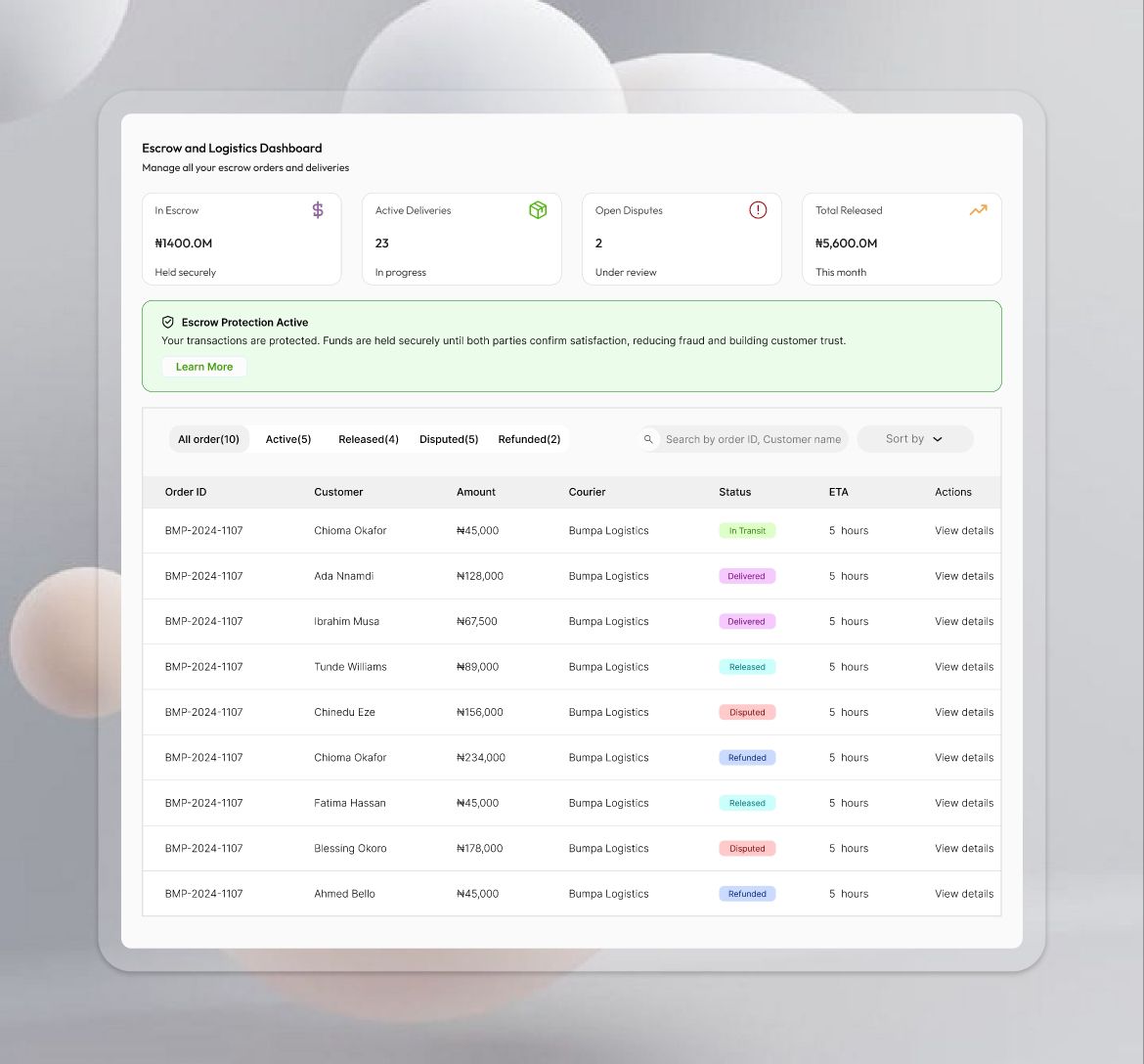
The seller dashboard provides a clear, real-time overview of all transactions and funds associated with the seller.
It displays:
• Funds Held Securely : payments currently locked in escrow
• In Progress : active orders awaiting delivery or buyer confirmation
• Under Review : transactions in dispute or admin review
• Total Released : funds successfully paid out to the seller
Transaction Initiation (Buyer)

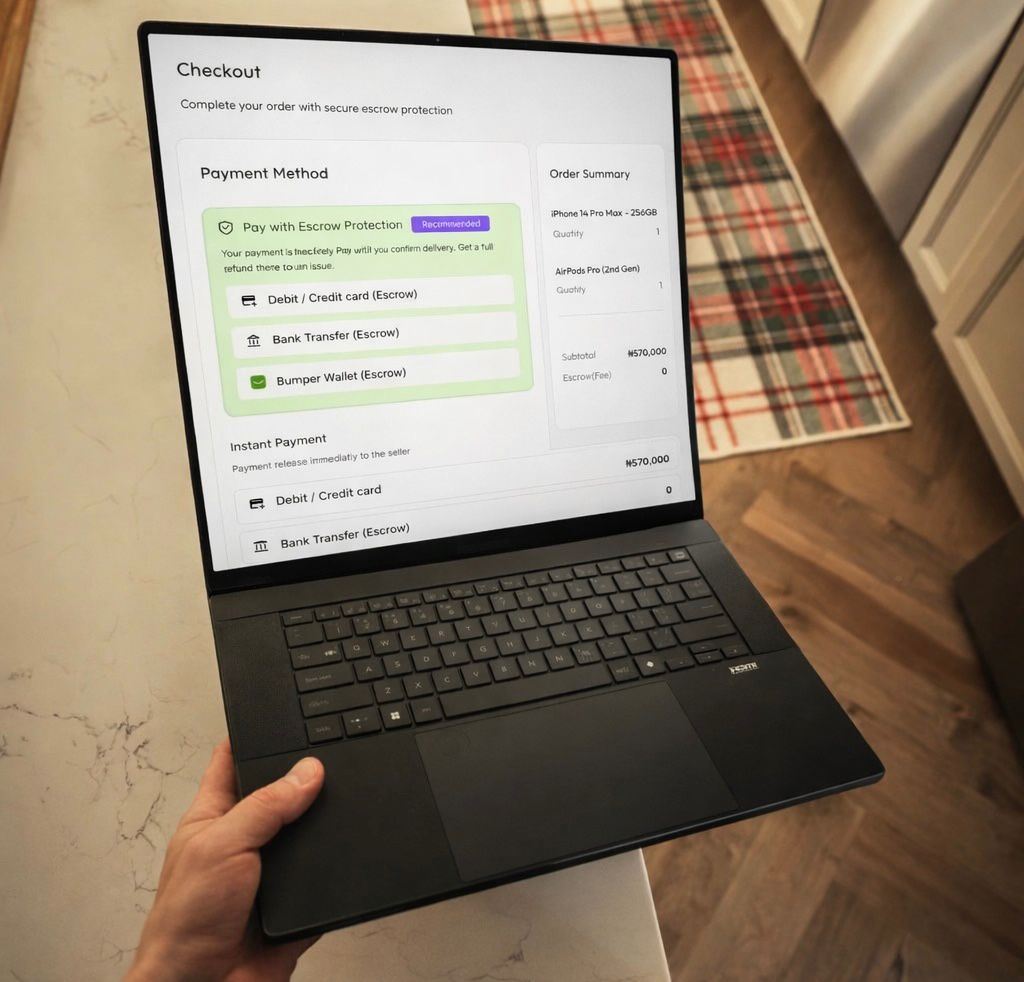
This screen allows the buyer to initiate a transaction and fund it securely.It clearly communicates that funds will be held in escrow, setting trust expectations before payment is made
Escrow Confirmation

This screen confirms that the buyer’s funds are successfully secured in escrow.It reassures both parties that payment is protected and the seller can proceed with fulfillment.
Seller Fulfillment View
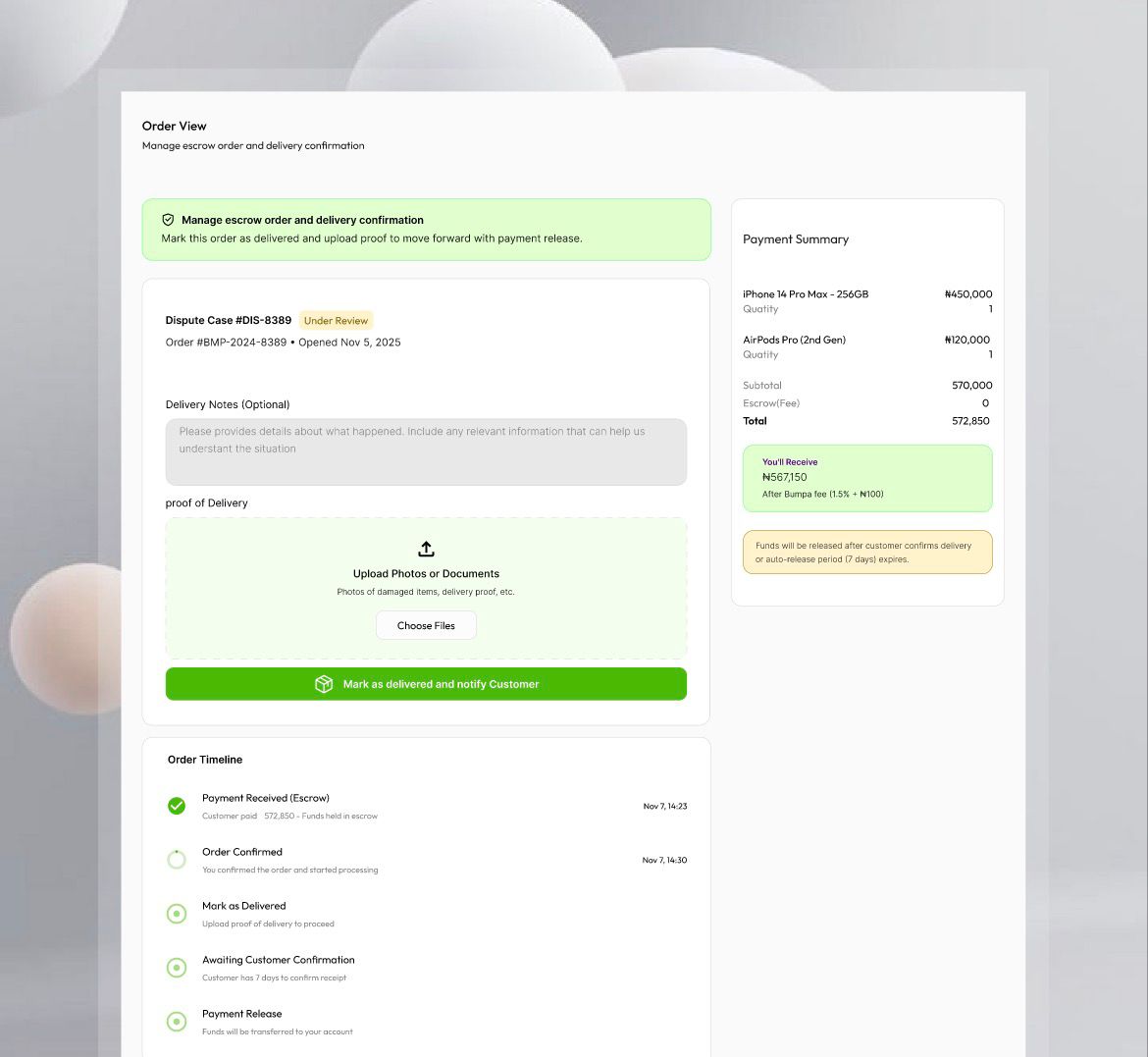
This screen confirms that the buyer’s funds are successfully secured in escrow.It reassures both parties that payment is protected and the seller can proceed with fulfillment.
Delivery Confirmation (Buyer)
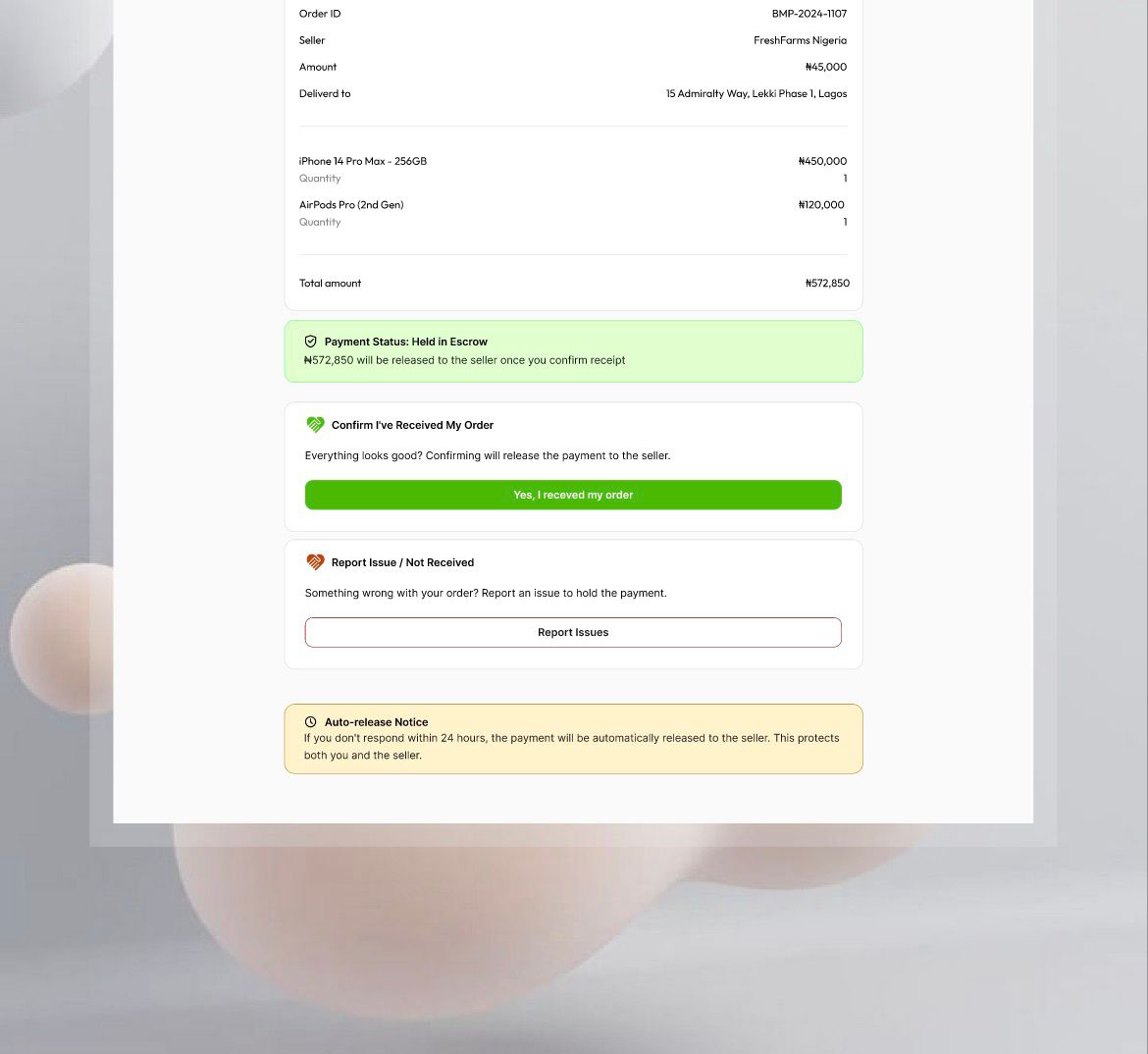
This screen allows the buyer to confirm receipt and satisfaction with the product, It gives buyers a sense of control and acts as the trigger for fund release.
Dispute Initiation

This screen enables buyers to raise a dispute within a defined time window, it replaces informal communication with a structured, fair escalation process.
Admin Dispute Review

This screen allows admins to review disputes, assess evidence, and take action, It ensures disputes are resolved efficiently without manual back-and-forth.
Fund Release Confirmation

This screen confirms that funds have been released to the seller, it closes the transaction loop and reinforces trust in the system.
Why These Screens Matter
Each screen exists to:
• Reduce anxiety during high-risk transactions
• Reinforce trust and transparency
• Support the escrow system without unnecessary complexity
No screen is decorative, every one supports a specific decision in the user flow.
What I Improved After Feedback
This idea caught the attention of Bumpa’s Founder and CEO, Mr. Kelvin, which led to a conversation about how sellers actually operate.
During that discussion, I learned something important: Many sellers need money upfront to complete an order, to buy stock, pay for production, or handle delivery. If all the money is locked away until delivery, some sellers simply can’t move forward
The Solution
i updated the escrow system to give sellers two simple payment options:
• Full Escrow: The buyer’s money is held safely until the product is delivered and confirmed.
• Partial Escrow: 70% is paid upfront so the seller can fulfill the order, 30% is held securely and released after the buyer confirms delivery
The seller chooses which option works best for them.
Why This Matters
This approach:
• Keeps buyers protected
• Gives sellers the cash they need to do the job
• Makes the escrow system practical, not restrictive
By listening to real feedback and adjusting the system, the solution became more realistic and easier for people to actually use.
Outcome
While the product has not yet launched, the design was evaluated against expected marketplace behaviors and research findings.
The escrow system is projected to:
• Increase buyer trust and completion rates by reducing fear of fraud and non-delivery
• Reduce payment-related disputes through clear transaction states and structured escalation
• Improve seller order fulfillment by enabling partial upfront payments for operational cash flow
• Shorten decision time for buyers by clearly communicating how their money is protected
• Increase platform adoption by offering flexible payment options that support different seller models
These outcomes suggest that a flexible escrow model can improve both transaction success and platform credibility.
Reflection
Back